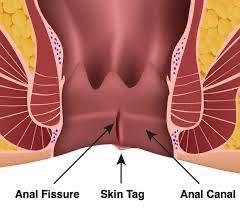
Fissure
Overview
An anal fissure is a small tear in the thin, moist tissue (mucosa) that lines the anus. An anal fissure may occur when you pass hard or large stools during a bowel movement. Anal fissures typically cause pain and bleeding with bowel movements. You also may experience spasms in the ring of muscle at the end of your anus (anal sphincter). Anal fissures are very common in young infants but can affect people of any age. Most anal fissures get better with simple treatments, such as increased fiber intake or sitz baths. Some people with anal fissures may need medication or, occasionally, surgery.
Symptoms
- Pain after bowel movements that can last up to several hours
- Bright red blood on the stool or toilet paper after a bowel movement
- A visible crack in the skin around the anus
- A small lump or skin tag on the skin near the anal fissure
Causes
Common causes of anal fissure include:
- Passing large or hard stools
- Constipation and straining during bowel movements
- Chronic diarrhea
- Childbirth
Less common causes of anal fissures include:
- Crohn's disease or another inflammatory bowel disease
- Anal cancer
- HIV
- Tuberculosis
- Syphilis
Risk factors
Factors that may increase your risk of developing an anal fissure include:- Constipation. Straining during bowel movements and passing hard stools increase the risk of tearing.
- Childbirth. Anal fissures are more common in women after they give birth.
- Crohn's disease. This inflammatory bowel disease causes chronic inflammation of the intestinal tract, which may make the lining of the anal canal more vulnerable to tearing.
- Age. Anal fissures can occur at any age, but are more common in infants and middle-aged adults.
Complications
Complications of anal fissure can include:
- Failure to heal. An anal fissure that fails to heal within eight weeks is considered chronic and may need further treatment.
- Recurrence. Once you've experienced an anal fissure, you are prone to having another one.
- A tear that extends to surrounding muscles. An anal fissure may extend into the ring of muscle that holds your anus closed (internal anal sphincter), making it more difficult for your anal fissure to heal. An unhealed fissure can trigger a cycle of discomfort that may require medications or surgery to reduce the pain and to repair or remove the fissure.
Prevention
You may be able to prevent an anal fissure by taking measures to prevent constipation or diarrhea. Eat high-fiber foods, drink fluids and exercise regularly